Closed-back vs. open-back changes what you and others hear
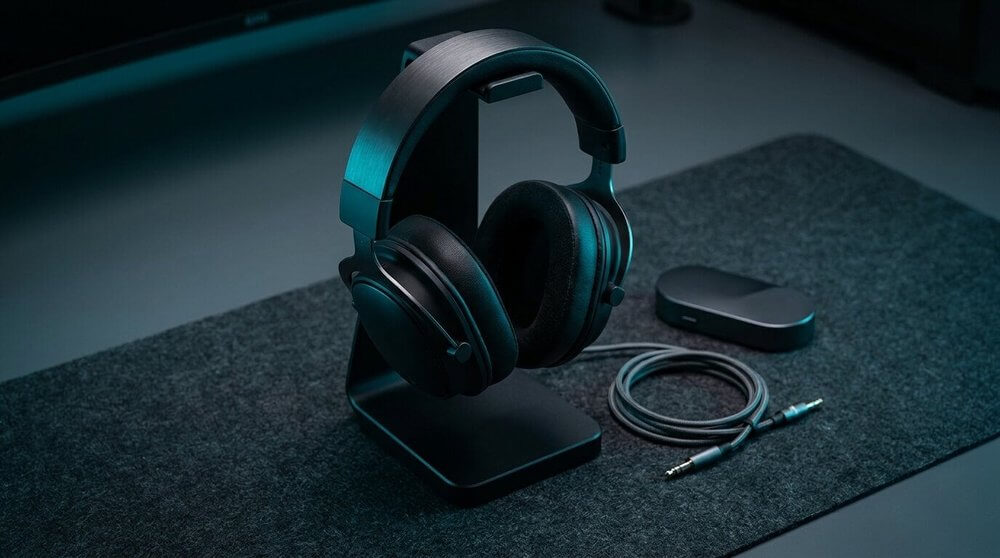
Closed-back headsets seal around the ear, blocking outside noise and keeping sound from leaking out. They're the default choice for shared spaces or households. Open-back headsets use a perforated ear cup that lets air, and sound, pass through in both directions. This widens the soundstage and can make positional audio feel more natural, but it means people nearby will hear what you're listening to, and you'll hear more of the room.
Microphone placement matters as much as the mic itself
A detachable boom mic can be removed for calls or portability and usually sits close enough to the mouth for clear pickup. Fixed booms are simpler but can't be repositioned as far. Built-in mics on the ear cup itself, without a boom, are the least reliable for voice clarity, since they sit further from your mouth.
Wireless headsets should specify their connection mode
A 2.4 GHz wireless headset with a dedicated USB receiver generally has lower latency than one that relies only on Bluetooth. If a headset lists both, the 2.4 GHz mode is usually the one to use for gaming, with Bluetooth as a secondary option for phone calls or switching devices.
Comfort is specific to head shape
Clamping force, ear cup depth, and headband padding all affect long-session comfort differently depending on head size and glasses use. Specs can hint at this (memory foam vs. standard foam, suspension headband vs. padded), but comfort is one of the areas where trying a headset on, even briefly in a store, tells you more than a spec sheet.