Latency is no longer the deciding factor
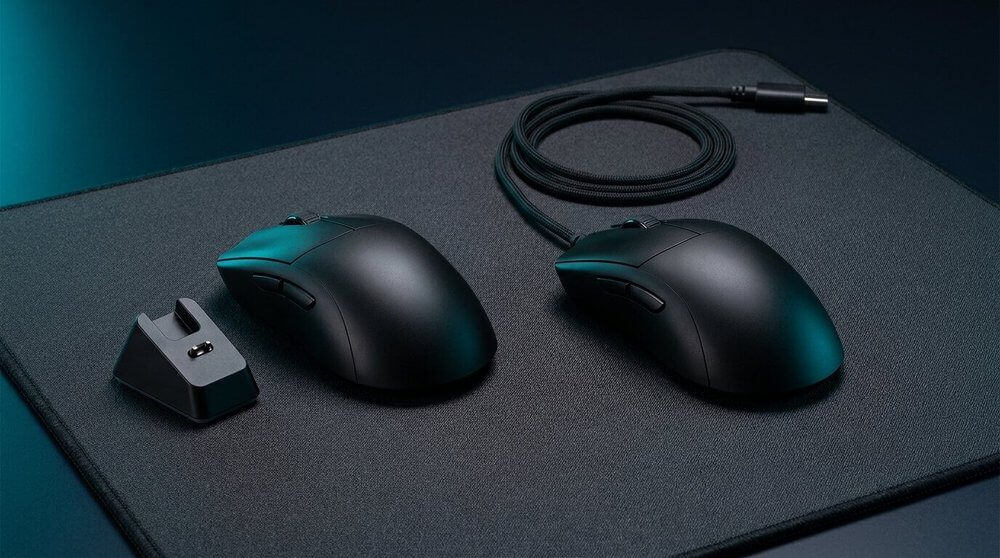
A few years ago, wired mice had a clear, measurable latency advantage over wireless. Modern 2.4 GHz wireless mice using a dedicated USB receiver now report input latency close enough to wired that it's not detectable in normal play. Bluetooth mice are the exception: Bluetooth still carries more overhead and isn't the mode competitive players reach for, even on mice that support it as a secondary connection.
Weight is where the real trade-off shows up
Batteries and wireless receivers add weight that a wired mouse doesn't carry. Manufacturers have addressed this with honeycomb shells and smaller batteries, and the lightest wireless mice now land close to the lightest wired ones, but a wired mouse of the same shell design will almost always be a few grams lighter.
Cable drag is a real, if small, factor
Even a lightweight braided or paracord-style cable adds a small amount of resistance during fast, low-sensitivity movements. Wireless removes this entirely. For most people the difference is marginal; for players making frequent large swipes at low DPI, it's more noticeable.
What to check before buying wireless
Look at the stated polling rate over the wireless connection specifically, not just the wired mode, since some mice quietly step down polling rate on battery power. Battery life claims are usually measured with lighting off, so expect shorter runtime with RGB enabled.