Traditional sticks wear down through physical contact
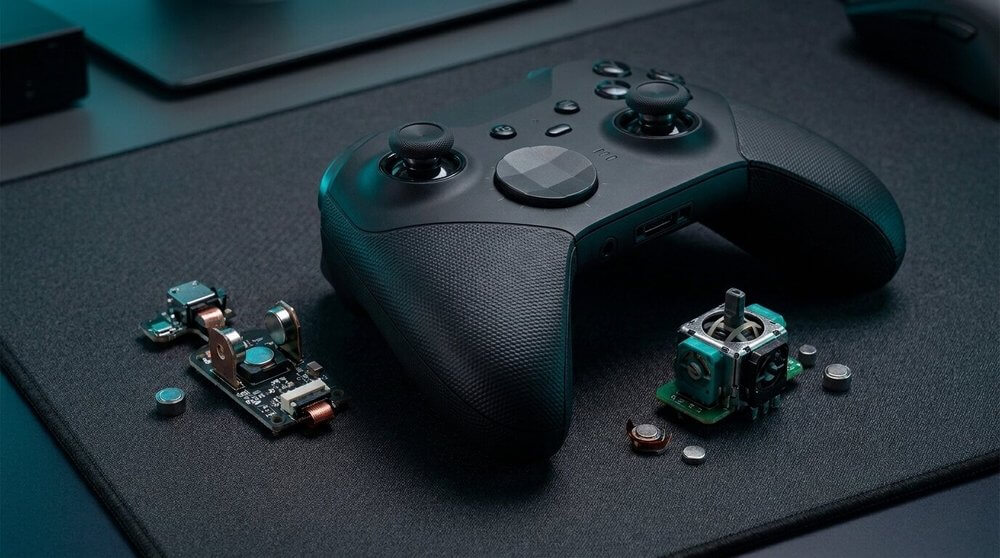
Most analog thumbsticks use a potentiometer: a small resistive track that a physical wiper slides across to measure position. Over thousands of hours of use, that physical contact wears down the track, which is the root cause of the drift where a controller reports stick movement when the stick is centered and untouched.
Hall-effect sticks measure a magnetic field instead
Hall-effect sticks replace the resistive track with a magnet and a sensor that reads the magnet's position without any physical contact between the moving and sensing parts. Because there's no surface being worn down by friction, hall-effect sticks are far more resistant to the specific wear pattern that causes drift.
This doesn't make a controller indestructible
Hall-effect sensing addresses drift specifically. It doesn't change other wear points: face buttons, triggers, shoulder buttons, and the housing itself still wear through normal use. A hall-effect controller can still fail for other reasons; it's a targeted fix for one common failure mode, not a general durability upgrade.
What to check on a spec sheet
Listings that specifically say "hall-effect" or "magnetic" sticks are describing this sensing method. Listings that only say "analog stick" without further detail are more likely using a traditional potentiometer design, which is still the norm on many controllers.